


22
Dec
Well-known brands such as Stormjet offer high-performance eco-friendly solvent printers that are favored by professional printing companies for their stable inkjet control system, high-precision printhead performance, and reliable media feeding and handling capabilities.
However, like all digital inkjet printing equipment, eco solvent printers may encounter technical and operational challenges during long-term operation. Understanding these common issues and establishing a systematic maintenance process can help reduce unplanned downtime and ensure consistent print quality.
Below are some common problems that may occur in eco-friendly solvent printing operations and their corresponding solutions.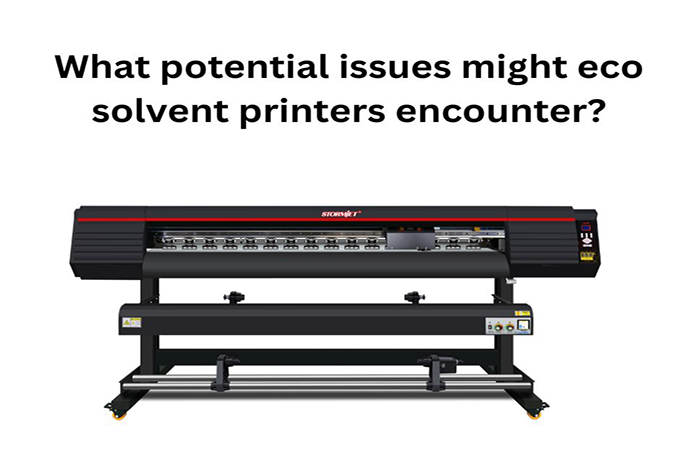
Printhead clogging is one of the most frequent problems in eco solvent printers, mainly caused by ink drying at the nozzle openings, which affects inkjet continuity and stability. This can result in broken lines, color deviation, or uneven image density. Regular automatic cleaning cycles, daily printheads checks, and the use of high-quality eco-friendly solvent ink recommended by Stormjet can significantly reduce clogging risks.
Color deviation usually stems from issues in color management. Incorrect RIP software settings, unsuitable ICC color profiles, ink batch differences, or lack of calibration may cause dull, oversaturated, or inconsistent colors compared to digital proofs. Regular color calibration, accurate media profile selection, and a stable ink supply system are essential for precise color reproduction.
Ink smudging often occurs when post-processing begins before the eco solvent ink has fully cured. Although eco solvent ink dries quickly, environmental factors such as humidity, temperature, and airflow can affect curing efficiency. Allowing sufficient curing time before laminating, cutting, or stacking helps prevent smudging and image blurring.
Media skewing, slippage, or paper jams can interrupt production and cause material waste. These problems are commonly related to improper media loading, dirty feed rollers, or worn pressure components. Regular cleaning of the media path, calibration of the feeding system, and correct roll installation help maintain smooth eco solvent printing operation.
Banding appears as horizontal or vertical stripes on printed images and is a common eco solvent printer issue. It is often caused by partial printhedas blockage, printhead misalignment, low ink levels, or improper print speed settings. Performing nozzle tests, adjusting printhead alignment, and selecting appropriate print modes can effectively improve output quality.
Although eco-friendly solvent printers are designed for optimized ink consumption, improper RIP settings, excessive ink limits, or ink delivery system issues may still lead to ink waste. By optimizing printing parameters, selecting economical print modes, and maintaining the ink system, users can reduce eco solvent ink consumption and control operating costs.
Insufficient maintenance is a major cause of shortened printhead lifespan. Using non-original ink, incorrect cleaning methods, or long periods of inactivity can accelerate printhead wear. For high-performance eco solvent printers such as Stormjet, following manufacturer maintenance guidelines and maintaining regular printer use helps extend piezoelectric printhead life.
Stable eco solvent printing depends on smooth coordination between printer drivers, firmware, and RIP software. Incompatible versions, outdated drivers, or software conflicts can cause communication errors or job interruptions. Regular firmware and driver updates are essential for maintaining printing system stability and compatibility.
Prolonged high-load printing or poor ventilation may cause eco solvent printers to overheat, affecting print quality and accelerating component aging. To ensure effective heat dissipation, the printer should be installed in a well-ventilated environment, and cooling fans and air vents should be cleaned regularly.
Unstable voltage or power surges may interfere with eco-friendly solvent printer electronics, potentially damaging the motherboard or power modules. Using a voltage regulator, UPS system, and proper grounding can help ensure power stability and protect the printing equipment.
Eco-friendly solvent printers, including high-performance models from trusted brands such as Stormjet, are reliable solutions for producing durable, high-quality prints. However, potential operational and technical risks still exist. By implementing regular maintenance routines, optimizing printing parameters, selecting suitable eco solvent inks, and maintaining a stable production environment, most common eco solvent printer problems can be effectively avoided. This improves production efficiency, ensures consistent print quality, and extends the overall lifespan of the printing equipment.


